
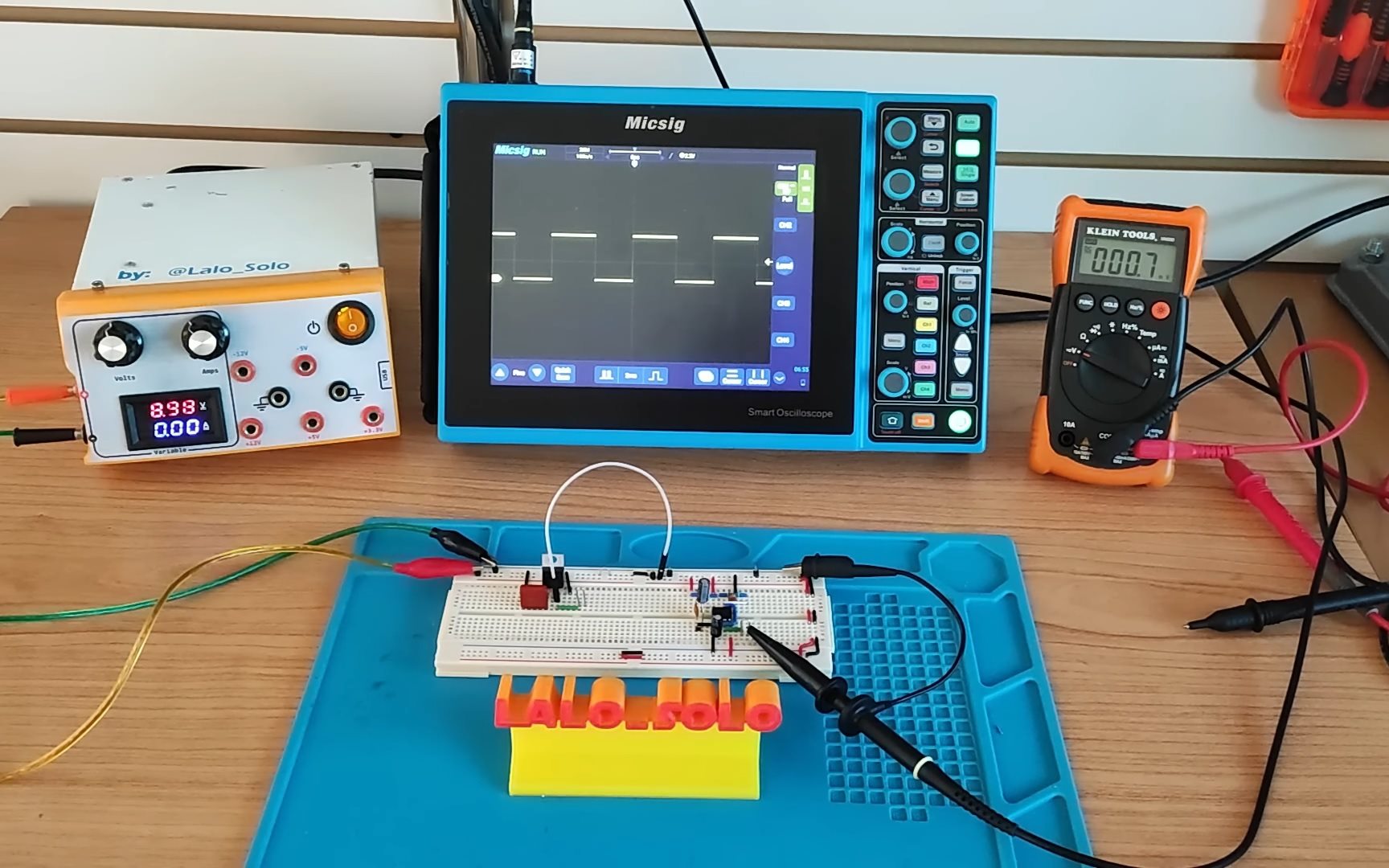
A variable bench power supply
The single most useful upgrade over a pile of USB cables and batteries. Being able to dial in an exact voltage and set a current limit means a wiring mistake trips the limit instead of cooking a component. For a new bench, an adjustable supply with a current limit is where I'd spend first.
An oscilloscope
A multimeter tells you a voltage now; an oscilloscope shows you how it changes over time. That is the difference between guessing and seeing — whether a clock is actually oscillating, how clean a 555's output square wave is, or why a signal has noise on it. A modern compact scope is far more affordable than the bench-sized instruments of a few years ago and does everything a hobbyist needs.
A decent multimeter
The workhorse. Continuity, voltage, and resistance checks are the first thing I reach for on any fault. A mid-range meter with a fast continuity beeper saves an enormous amount of time when hunting a bad joint or a wrong connection — you don't need the most expensive model, just a reliable one.
Soldering and the small stuff
A temperature-controlled soldering iron, good flux, and fine solder make SMD work possible rather than painful. Beyond that, it is the little things that make a bench pleasant to work at:
- A silicone mat — heat-resistant, catches parts, and keeps the bench from becoming a maze of scratches and rolling components.
- Helping hands or a PCB holder so you have more than two hands while soldering.
- Good lighting and, for SMD, some magnification.
- Jumper wires and a tidy breadboard — where most ideas start before they become a PCB.
Buy the tools that let you observe — power with a current limit, and a scope. You can debug almost anything if you can see what the circuit is doing.
Build the bench around what you make
My bench grew alongside my projects — the supply and scope earned their place the first time they saved a part or a wasted afternoon. If you're starting out, don't buy everything at once; add each tool when a project makes you wish you had it. That way every purchase is one you'll actually use.
Two upgrades change everything early on: a power supply with an adjustable current limit (so mistakes trip instead of burn) and an oscilloscope (so you can see, not guess).